Lower Back Exercises: A Complete Guide to Strengthening Your Back and Reducing Pain
Lower back pain is one of the most common health problems experienced by people of all ages. Whether you spend long hours sitting at a desk, perform physically demanding work, or simply have poor posture, discomfort in the lower back can affect your daily life. Fortunately, lower back exercises can help strengthen the muscles that support your spine, improve flexibility, reduce pain, and prevent future injuries.
A strong lower back is essential for maintaining good posture, balance, and overall mobility. The muscles in your lower back work together with your core, hips, and legs to support everyday movements such as walking, lifting, bending, and standing. When these muscles become weak or tight, the risk of pain and injury increases significantly.
This guide covers everything you need to know about lower back exercises, including their benefits, common causes of lower back pain, the most effective exercises, safety tips, and how to create a simple routine that works for your fitness level.
What Are Lower Back Exercises?
Lower back exercises are physical movements designed to strengthen, stretch, and stabilize the muscles surrounding the lumbar spine. These exercises target several important muscle groups, including the erector spinae, glutes, hamstrings, abdominal muscles, and hip flexors.
The primary goal of lower back exercises is to improve spinal support and reduce stress on the lower back. They can be used for injury prevention, rehabilitation, improved athletic performance, and better overall health.
Regular practice of lower back exercises can help individuals maintain flexibility, improve posture, and perform daily activities with less discomfort.
Benefits of Lower Back Exercises
Performing lower back exercises consistently offers numerous health benefits.
Reduced Back Pain
Strengthening the muscles that support the spine helps reduce strain on the lower back, leading to less pain and discomfort.
Improved Posture
Many people develop poor posture due to prolonged sitting and weak core muscles. Lower back exercises help align the spine and improve posture.
Increased Flexibility
Stretching exercises improve the range of motion in the lower back, hips, and hamstrings, making movement easier and more comfortable.
Better Balance and Stability
A stronger lower back contributes to better balance, reducing the risk of falls and injuries.
Enhanced Athletic Performance
Athletes rely on a strong core and lower back for power, speed, and stability. Regular exercises can improve performance in sports and fitness activities.
Injury Prevention
Strengthening the muscles surrounding the spine helps protect the lower back from strains and injuries during daily activities.
Common Causes of Lower Back Pain
Understanding the causes of lower back pain can help you address the root problem.
Poor Posture
Sitting or standing incorrectly places unnecessary stress on the lower back.
Muscle Weakness
Weak abdominal and back muscles fail to support the spine properly.
Lack of Physical Activity
A sedentary lifestyle often leads to stiff muscles and reduced flexibility.
Heavy Lifting
Improper lifting techniques can strain the muscles and ligaments of the lower back.
Obesity
Excess body weight increases pressure on the spine and lower back.
Stress
Mental stress can cause muscle tension, contributing to back discomfort.
Why Strengthening the Lower Back Is Important
The lower back serves as the foundation of many body movements. Every time you walk, bend, twist, or lift an object, your lower back plays an essential role.
Strong lower back muscles support the spine, distribute forces evenly throughout the body, and reduce the risk of injuries. A well-conditioned lower back also improves mobility and helps maintain independence as you age.
Ignoring lower back strength can lead to chronic pain, limited mobility, and a reduced quality of life.
Pelvic Tilt Exercise
The pelvic tilt is one of the simplest and most effective lower back exercises for beginners.
How to Perform
- Lie on your back with knees bent.
- Keep your feet flat on the floor.
- Tighten your abdominal muscles.
- Flatten your lower back against the floor.
- Hold for five seconds.
- Relax and repeat.
Benefits
- Strengthens abdominal muscles
- Improves spinal stability
- Reduces lower back tension
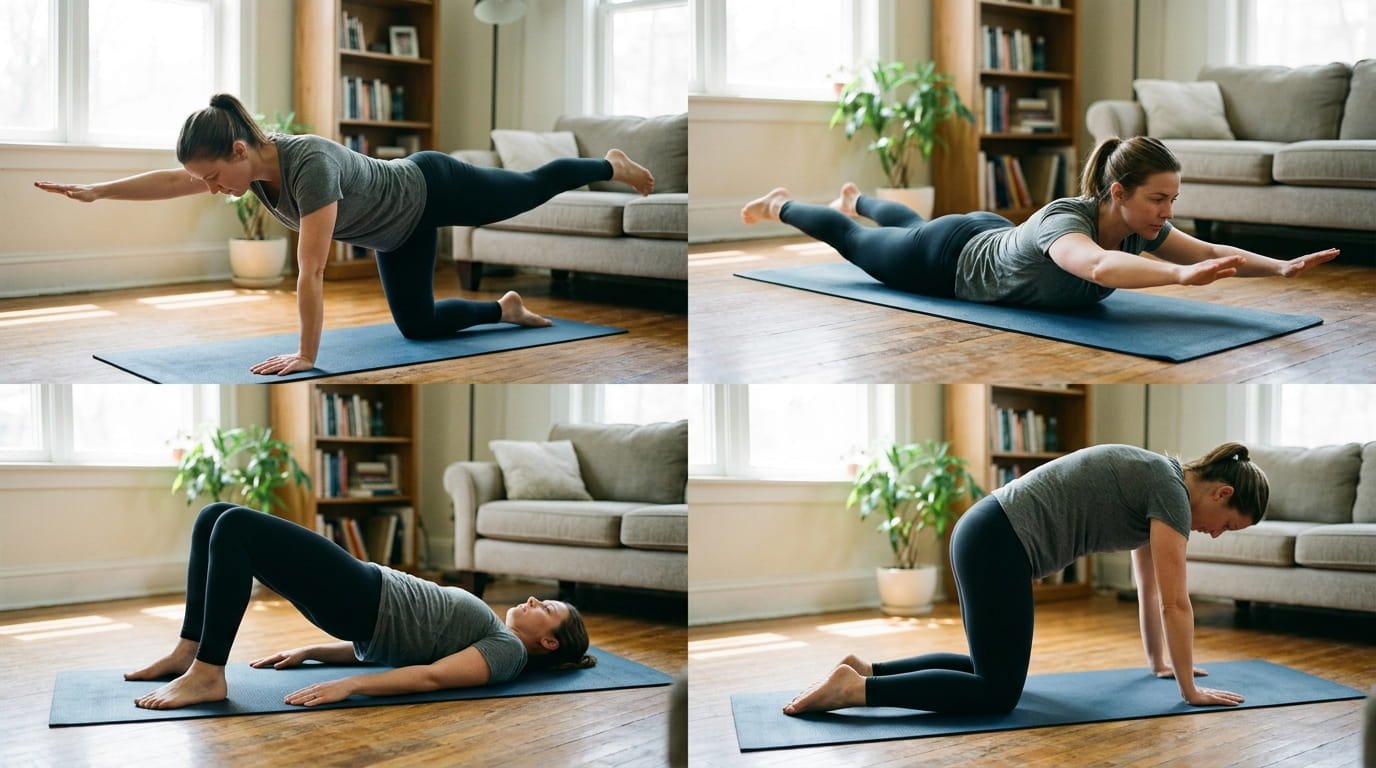
Cat-Cow Stretch
The Cat-Cow stretch improves flexibility and mobility in the spine.
How to Perform
- Start on your hands and knees.
- Arch your back upward like a cat.
- Hold briefly.
- Slowly lower your stomach while lifting your head.
- Repeat the movement smoothly.
Benefits
- Increases spinal flexibility
- Relieves stiffness
- Improves posture
Child’s Pose
Child’s Pose is a gentle stretch commonly used in yoga.
How to Perform
- Kneel on the floor.
- Sit back on your heels.
- Extend your arms forward.
- Lower your chest toward the floor.
- Hold for 20 to 30 seconds.
Benefits
- Relaxes the lower back
- Reduces muscle tension
- Promotes flexibility
Bird-Dog Exercise
The Bird-Dog exercise improves balance and core stability.
How to Perform
- Begin on your hands and knees.
- Extend your right arm forward.
- Extend your left leg backward.
- Hold for a few seconds.
- Return to the starting position.
- Switch sides.
Benefits
- Strengthens the core
- Enhances balance
- Supports spinal health
Glute Bridge
The glute bridge strengthens the lower back, hips, and glutes.
How to Perform
- Lie on your back with knees bent.
- Keep feet flat on the floor.
- Lift your hips toward the ceiling.
- Squeeze your glutes at the top.
- Lower slowly.
Benefits
- Strengthens glutes
- Supports the lower back
- Improves hip mobility
Knee-to-Chest Stretch
This exercise gently stretches the lower back muscles.
How to Perform
- Lie on your back.
- Pull one knee toward your chest.
- Hold for 20 seconds.
- Switch legs.
- Repeat several times.
Benefits
- Relieves tightness
- Improves flexibility
- Reduces discomfort
Superman Exercise
The Superman exercise targets the muscles along the spine.
How to Perform
- Lie face down.
- Extend your arms forward.
- Lift your arms and legs simultaneously.
- Hold briefly.
- Lower slowly.
Benefits
- Strengthens spinal muscles
- Improves posture
- Enhances endurance
Plank for Lower Back Support
Planks build core strength that directly benefits the lower back.
How to Perform
- Assume a push-up position.
- Support your weight on your forearms.
- Keep your body straight.
- Hold for 20 to 60 seconds.
Benefits
- Strengthens the core
- Supports spinal alignment
- Improves stability
Lower Back Exercises at Home
Many lower back exercises require no equipment and can be performed at home.
Examples include:
- Pelvic Tilts
- Bird-Dog
- Child’s Pose
- Cat-Cow Stretch
- Glute Bridges
- Planks
- Knee-to-Chest Stretch
Creating a home workout routine makes it easier to stay consistent and maintain spinal health.
Exercises to Avoid with Lower Back Pain
Certain exercises may worsen existing lower back problems.
Toe Touches
Can place excessive stress on spinal discs.
Heavy Deadlifts
Improper technique may increase injury risk.
Sit-Ups
Traditional sit-ups can strain the lower back.
High-Impact Activities
Running and jumping may aggravate pain for some individuals.
Always consult a healthcare professional if you experience severe or persistent pain.
Tips for Safe Lower Back Workouts
Warm Up First
Spend five to ten minutes warming up before exercising.
Maintain Proper Form
Good technique reduces injury risk and improves results.
Start Slowly
Begin with beginner-friendly exercises and gradually increase intensity.
Listen to Your Body
Stop immediately if an exercise causes sharp or severe pain.
Stay Consistent
Regular exercise produces better results than occasional intense workouts.
How Often Should You Do Lower Back Exercises?
Most individuals benefit from performing lower back exercises three to five times per week.
A balanced routine may include:
- Strength exercises two to three times weekly
- Stretching exercises daily
- Core workouts several times per week
Consistency is the key to long-term improvement.
Lower Back Exercises for Seniors
Older adults can greatly benefit from gentle lower back exercises.
Recommended exercises include:
- Pelvic Tilts
- Child’s Pose
- Knee-to-Chest Stretch
- Walking
- Gentle Yoga
These activities help maintain flexibility, mobility, and independence.
Lower Back Exercises for Office Workers
Office workers often experience lower back pain due to prolonged sitting.
Helpful exercises include:
- Seated Spinal Twists
- Cat-Cow Stretch
- Standing Back Extensions
- Hip Flexor Stretches
- Walking Breaks
Taking short movement breaks throughout the day can significantly reduce stiffness.
Creating a Simple Weekly Lower Back Exercise Routine
Monday
- Pelvic Tilts
- Bird-Dog
- Child’s Pose
Wednesday
- Glute Bridges
- Planks
- Knee-to-Chest Stretch
Friday
- Superman Exercise
- Cat-Cow Stretch
- Child’s Pose
Daily
- Light walking
- Gentle stretching
This routine provides a balanced combination of strength, flexibility, and mobility exercises.
Signs You Should See a Doctor
Seek medical attention if you experience:
- Severe back pain
- Pain lasting more than several weeks
- Numbness or tingling
- Weakness in the legs
- Loss of bladder or bowel control
These symptoms may indicate a more serious condition requiring professional treatment.
Conclusion
Lower back exercises are one of the most effective ways to strengthen the muscles that support your spine, improve flexibility, and reduce discomfort. Whether you are dealing with occasional stiffness, recovering from an injury, or simply looking to maintain a healthy back, incorporating regular exercise into your routine can make a significant difference.
Simple movements such as pelvic tilts, bird-dog exercises, glute bridges, planks, and stretching routines can help improve posture, enhance mobility, and prevent future injuries. The key to success is consistency, proper technique, and gradually progressing at a pace that suits your fitness level.
By dedicating just a few minutes each week to lower back exercises, you can build a stronger, healthier back and enjoy a more active, pain-free lifestyle.
Frequently Asked Questions
What are the best lower back exercises for beginners?
Pelvic tilts, child’s pose, bird-dog exercises, knee-to-chest stretches, and glute bridges are excellent beginner-friendly options.
Can lower back exercises help relieve pain?
Yes, properly performed lower back exercises can strengthen supporting muscles, improve flexibility, and reduce pain over time.
How long does it take to see results?
Many people notice improvements within a few weeks of consistent exercise.
Are lower back exercises safe every day?
Gentle stretching exercises can often be performed daily, while strengthening exercises should typically be done several times per week.
Should I exercise if my lower back hurts?
Mild discomfort may improve with gentle movement, but severe pain should be evaluated by a healthcare professional before exercising.
Can walking help lower back pain?
Yes, walking is a low-impact activity that promotes circulation, flexibility, and overall spinal health.