Dental Crown Glue: Types, Uses, Benefits, and Safety Guide
Dental crowns are one of the most common restorative treatments used in modern dentistry. They help protect damaged teeth, restore functionality, and improve the appearance of a patient’s smile. However, a dental crown can only perform effectively when it is securely attached to the tooth. This is where dental crown glue plays a crucial role.
Dental crown glue, also known as dental cement or dental adhesive, is a specialized material used by dentists to bond crowns to natural teeth or dental implants. It provides a strong and durable connection that allows patients to eat, speak, and smile confidently.
In this comprehensive guide, we will explore everything you need to know about dental crown glue, including its types, uses, benefits, application process, safety considerations, and what to do if your crown falls off.
What Is Dental Crown Glue?
Dental crown glue is a specially formulated dental adhesive designed to attach a crown securely to a prepared tooth. Unlike ordinary household glues, dental crown adhesives are biocompatible and specifically engineered for use inside the mouth.
The primary purpose of dental crown glue is to create a strong bond between the crown and the tooth structure. This bond helps prevent movement, protects the tooth from bacteria, and ensures long-term stability.
Dentists select the type of dental crown glue based on several factors, including:
- Crown material
- Tooth condition
- Bite pressure
- Patient’s oral health
- Long-term treatment goals
Why Is Dental Crown Glue Important?
Dental crowns are exposed to significant pressure every day from chewing, biting, and speaking. Without proper adhesive, crowns may become loose or fall off.
Dental crown glue is important because it:
- Secures the crown firmly in place
- Prevents bacterial leakage
- Protects the underlying tooth
- Improves crown longevity
- Enhances patient comfort
- Maintains proper bite alignment
A properly cemented crown can last many years with proper care and maintenance.
Types of Dental Crown Glue
Modern dentistry uses several types of dental crown cements. Each type offers unique advantages and is suitable for specific situations.
1. Glass Ionomer Cement
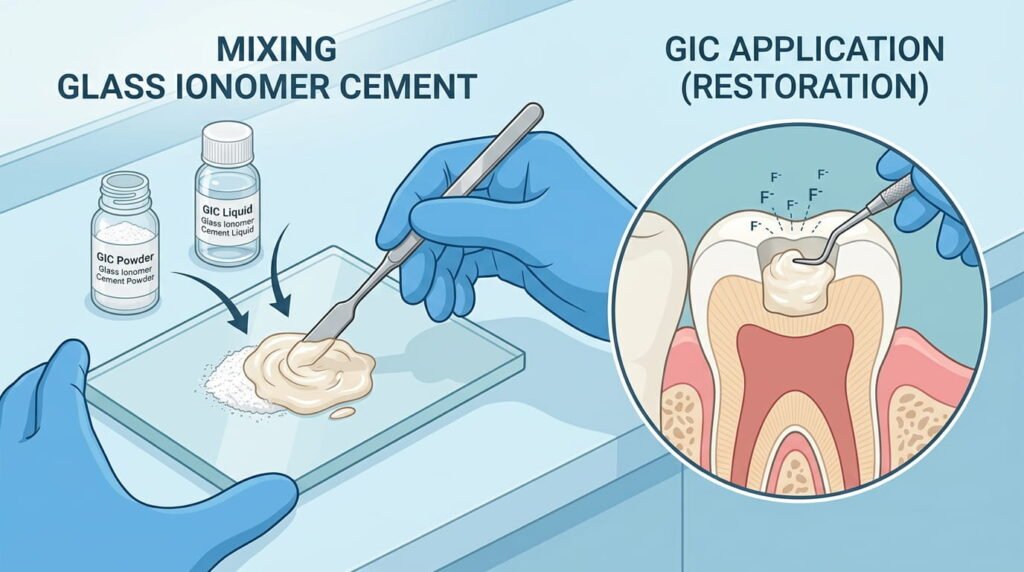
Glass ionomer cement is a popular choice for crown placement.
Advantages
- Releases fluoride
- Provides chemical bonding
- Easy application
- Good durability
Best Used For
- Metal crowns
- Porcelain-fused-to-metal crowns
- Low-stress areas
2. Resin Cement
Resin cement is one of the strongest dental adhesives available today.
Advantages
- Exceptional bonding strength
- Excellent aesthetics
- Resistant to moisture
- Long-lasting performance
Best Used For
- Ceramic crowns
- Porcelain crowns
- Zirconia crowns
3. Resin-Modified Glass Ionomer Cement
This type combines the benefits of resin and glass ionomer materials.
Advantages
- Strong bonding
- Fluoride release
- Improved durability
- Better moisture resistance
Best Used For
- General crown placement
- Long-term restorations
4. Zinc Phosphate Cement
Zinc phosphate cement has been used in dentistry for many decades.
Advantages
- Proven track record
- Reliable performance
- Cost-effective
Best Used For
- Traditional metal crowns
- Certain bridge restorations
5. Temporary Crown Cement
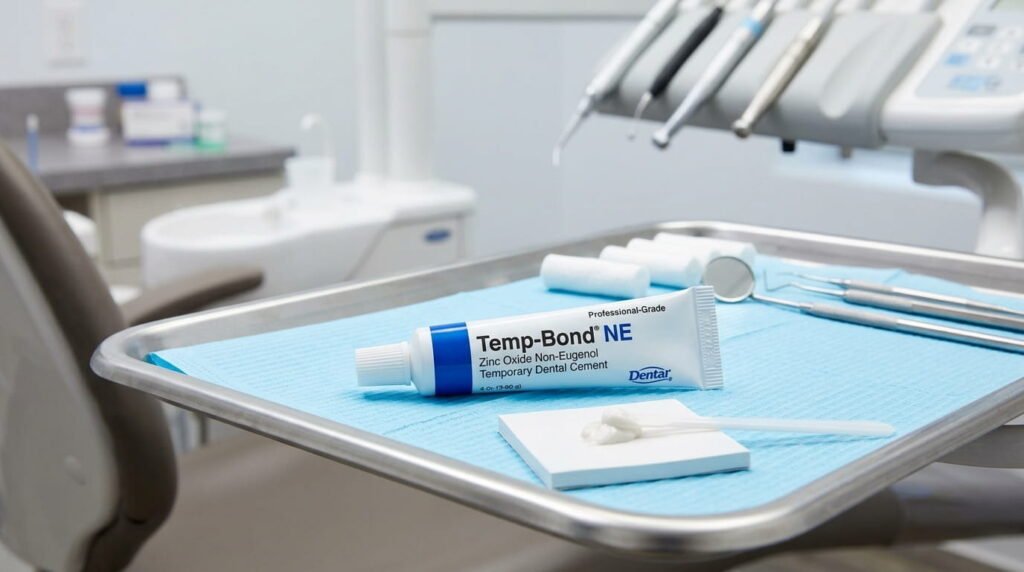
Temporary dental crown glue is designed for short-term use.
Advantages
- Easy crown removal
- Comfortable fit
- Temporary protection
Best Used For
- Temporary crowns
- Short-term restorations
How Dental Crown Glue Works
Dental crown glue works by creating a bond between the crown and the prepared tooth surface.
The process typically involves:
- Tooth preparation
- Crown fitting
- Tooth cleaning
- Cement application
- Crown placement
- Excess cement removal
- Bite adjustment
Once the adhesive sets, it forms a secure connection capable of withstanding daily chewing forces.
The Dental Crown Cementation Procedure
The crown cementation process is a critical step in dental restoration.
Step 1: Examination
The dentist examines the prepared tooth and crown to ensure proper fit.
Step 2: Cleaning
The tooth surface is thoroughly cleaned and dried.
Step 3: Applying the Glue
A small amount of dental crown glue is placed inside the crown.
Step 4: Crown Placement
The crown is carefully positioned over the tooth.
Step 5: Pressure Application
Gentle pressure is applied to seat the crown properly.
Step 6: Removing Excess Cement
The dentist removes excess adhesive around the crown.
Step 7: Final Evaluation
The bite and fit are checked to ensure patient comfort.
Benefits of Dental Crown Glue
Using high-quality dental crown glue offers numerous benefits.
Strong Retention
Modern adhesives provide exceptional holding power.
Long-Term Stability
Properly bonded crowns can remain secure for many years.
Enhanced Comfort
A stable crown feels natural and comfortable.
Protection Against Decay
Dental cement seals gaps that could allow bacteria to enter.
Improved Aesthetics
Proper crown placement enhances smile appearance.
Better Functionality
Patients can chew and speak normally without worrying about crown movement.
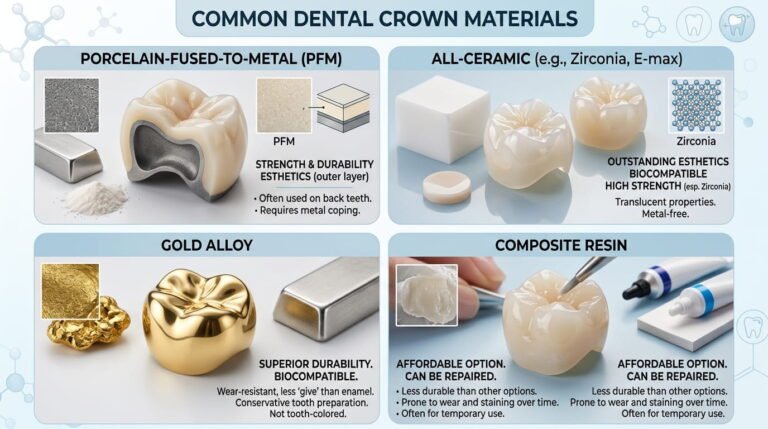
Dental Crown Glue for Different Crown Materials
Different crown materials require specific bonding techniques.
Porcelain Crowns
Porcelain crowns often use resin-based adhesives for maximum strength and aesthetics.
Zirconia Crowns
Special resin cements are commonly used because zirconia is highly durable.
Metal Crowns
Glass ionomer or zinc phosphate cement may be used effectively.
Porcelain-Fused-to-Metal Crowns
Several types of dental crown glue can provide excellent retention.
How Long Does Dental Crown Glue Last?
The lifespan of dental crown glue depends on multiple factors.
These include:
- Type of cement used
- Oral hygiene habits
- Crown material
- Bite force
- Dietary habits
- Dentist’s technique
In many cases, professional dental crown cement can last between 5 and 15 years or even longer.
Signs of Crown Glue Failure
Sometimes dental crown glue can weaken over time.
Common signs include:
- Crown movement
- Sensitivity
- Pain while chewing
- Crown loosening
- Bad taste in the mouth
- Food trapping around the crown
Patients experiencing these symptoms should contact a dentist promptly.
What Causes Dental Crowns to Fall Off?
Several factors can contribute to crown detachment.
Tooth Decay
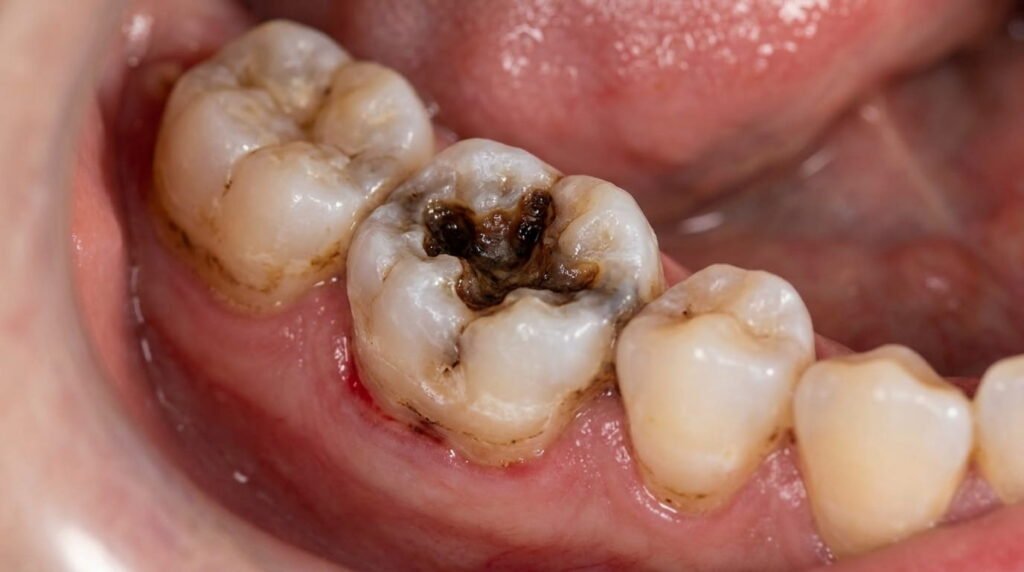
Decay beneath the crown can compromise retention.
Cement Breakdown
Dental adhesives naturally wear down over time.
Trauma
Accidents or injuries can dislodge crowns.
Teeth Grinding
Bruxism places excessive stress on crowns.
Poor Oral Hygiene
Bacterial buildup can affect crown stability.
What to Do If Your Crown Falls Off
If a crown becomes detached:
- Retrieve the crown carefully.
- Keep it clean.
- Avoid chewing on the affected side.
- Contact your dentist immediately.
- Do not use household glue.
Professional evaluation is essential to determine whether the crown can be reattached.
Can You Buy Dental Crown Glue Over the Counter?
Temporary dental repair kits are available in pharmacies and online stores.
However, these products should only be used as temporary solutions until professional treatment is available.
Professional dental crown glue offers:
- Superior strength
- Better durability
- Enhanced safety
- Longer-lasting results
Is Dental Crown Glue Safe?
Yes, professional dental crown glue is considered safe when applied by qualified dental professionals.
These materials undergo extensive testing for:
- Biocompatibility
- Strength
- Durability
- Safety standards
Patients rarely experience complications when crowns are properly cemented.
Caring for a Crowned Tooth
Proper care helps maximize crown lifespan.
Brush Daily
Use fluoride toothpaste twice daily.
Floss Regularly
Remove plaque around the crown margins.
Avoid Hard Foods
Reduce the risk of crown damage.
Visit Your Dentist
Regular checkups help identify issues early.
Wear a Night Guard
Patients who grind their teeth may benefit from protective appliances.
Common Myths About Dental Crown Glue
Myth 1: Any Glue Can Fix a Crown
False. Only dental-grade adhesives are safe for oral use.
Myth 2: Crown Glue Lasts Forever
False. Dental cement can wear down over time.
Myth 3: Loose Crowns Are Not Serious

False. Loose crowns should be evaluated promptly.
Myth 4: DIY Repairs Are Safe
False. Home repairs can cause additional damage.
Future Developments in Dental Crown Adhesives
Dental materials continue to improve.
Emerging technologies focus on:
- Stronger bonding agents
- Faster setting times
- Improved aesthetics
- Enhanced durability
- Greater resistance to bacteria
These innovations are expected to improve the success and longevity of dental restorations.
Conclusion
Dental crown glue is a vital component of modern restorative dentistry. It provides the strength, stability, and protection necessary for dental crowns to function effectively. Whether used for porcelain, zirconia, or metal crowns, the right dental adhesive ensures a secure bond and long-lasting results.
Understanding the different types of dental crown glue, their benefits, and proper maintenance can help patients make informed decisions about their oral health. If you experience a loose or detached crown, always seek professional dental care rather than attempting a permanent repair at home.
With proper placement and good oral hygiene, a crown secured with high-quality dental crown glue can provide many years of reliable service and a healthy, confident smile.