Dental Crown Procedure: Complete Step-by-Step Guide
A healthy smile plays a significant role in both oral health and self-confidence. However, teeth can become damaged due to decay, injury, wear and tear, or dental procedures such as root canals. When a tooth is weakened or broken, dentists often recommend a dental crown to restore its function and appearance. Understanding the dental crown procedure can help patients feel more confident and prepared before treatment.
A dental crown is a custom-made cap placed over a damaged tooth to restore its shape, strength, size, and appearance. Crowns are designed to blend naturally with surrounding teeth while providing long-lasting protection. Whether you need a crown after a root canal, to repair a cracked tooth, or for cosmetic enhancement, knowing what to expect during the dental crown procedure is essential.
This comprehensive guide explains every aspect of the dental crown procedure, including its purpose, steps, benefits, costs, recovery, and aftercare tips.
What Is a Dental Crown?
A dental crown is a tooth-shaped cap that completely covers a damaged or weakened tooth. Once cemented into place, it becomes the new outer surface of the tooth.
Dental crowns are commonly made from:
- Porcelain
- Ceramic
- Zirconia
- Metal alloys
- Porcelain-fused-to-metal (PFM)
- Gold
Each material offers different advantages in terms of durability, aesthetics, and cost.
Why Is a Dental Crown Needed?
Dentists recommend crowns for several reasons:
1. Protecting a Weak Tooth
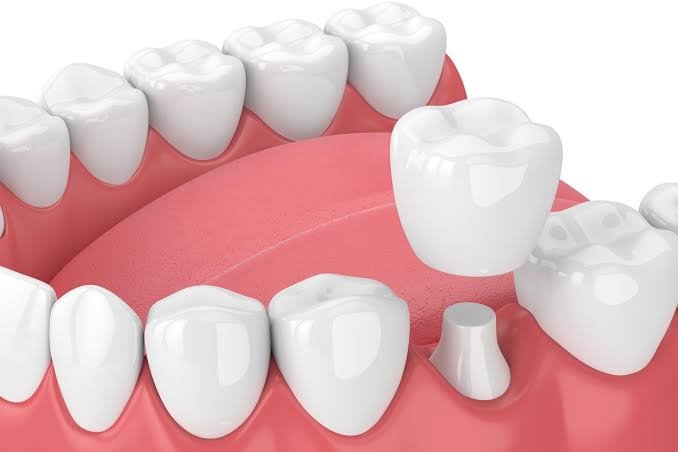
A crown strengthens a tooth that has been weakened by decay, large fillings, or fractures.
2. Restoring a Broken Tooth
Crowns restore functionality and appearance to damaged or cracked teeth.
3. After Root Canal Treatment
Teeth that have undergone root canal therapy often become fragile. A crown protects the tooth from breaking.
4. Covering Large Fillings
When a filling occupies a significant portion of the tooth, a crown provides better support.
5. Improving Cosmetic Appearance
Crowns can improve the shape, color, and alignment of teeth.
6. Supporting a Dental Bridge
Crowns serve as anchors for dental bridges that replace missing teeth.
7. Covering Dental Implants
A crown is attached to a dental implant to replace a missing tooth.
Types of Dental Crowns
Porcelain Crowns
Porcelain crowns closely resemble natural teeth and are commonly used for front teeth.
Advantages:
- Excellent appearance
- Natural color match
- Metal-free
Ceramic Crowns
Ceramic crowns offer similar aesthetic benefits and are suitable for patients with metal allergies.
Zirconia Crowns
Zirconia crowns are highly durable and increasingly popular.
Benefits:
- Strong and long-lasting
- Natural appearance
- Resistant to chipping
Metal Crowns
Metal crowns are made from gold or metal alloys.
Advantages:
- Extremely durable
- Long lifespan
- Minimal tooth reduction required
Porcelain-Fused-to-Metal Crowns
These crowns combine the strength of metal with the appearance of porcelain.
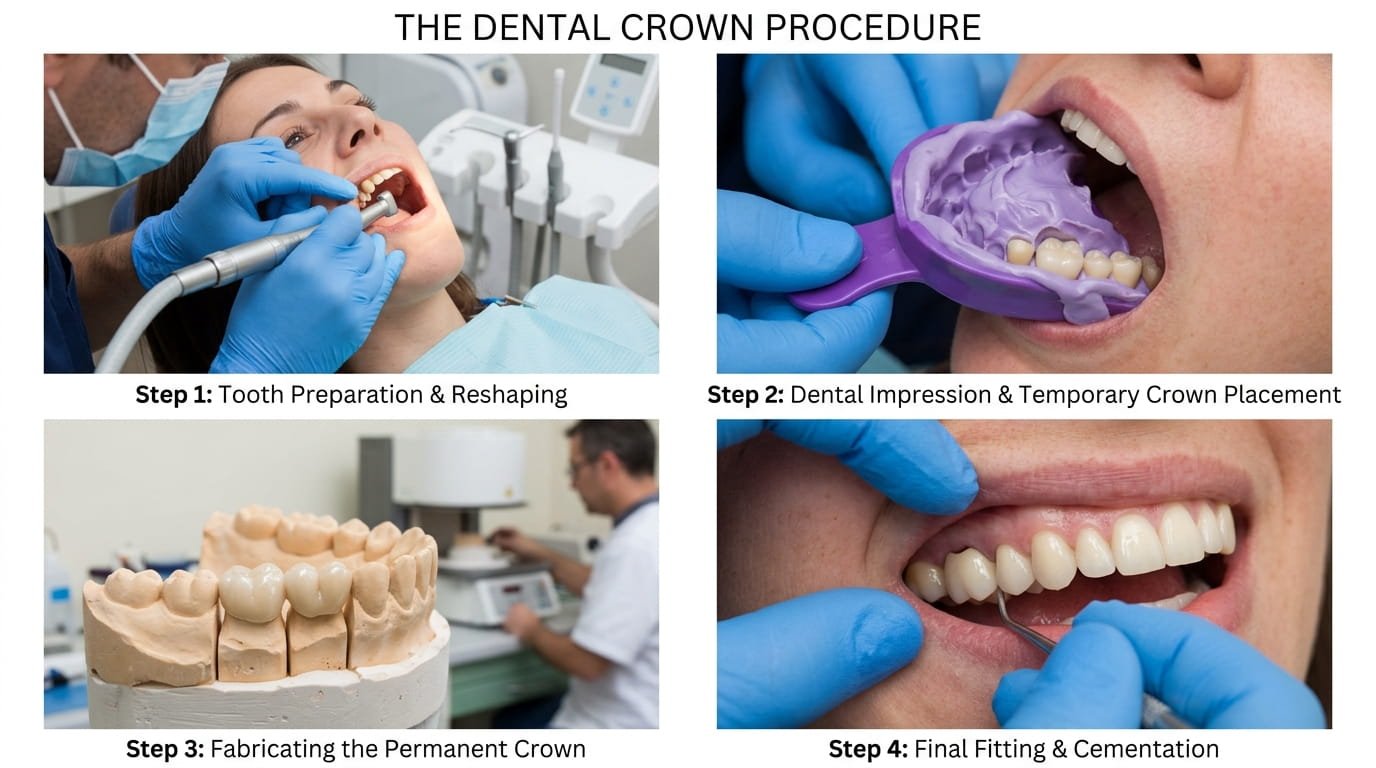
The Dental Crown Procedure: Step-by-Step
Understanding each stage of the dental crown procedure helps reduce anxiety and ensures realistic expectations.
Step 1: Initial Consultation and Examination
The procedure begins with a dental examination.
During this visit, the dentist:
- Evaluates the affected tooth
- Reviews medical history
- Takes X-rays
- Discusses treatment options
X-rays help determine whether the tooth root and surrounding bone are healthy enough to support a crown.
Step 2: Preparing the Tooth
Before placing a crown, the tooth must be reshaped.
The dentist:
- Administers local anesthesia
- Removes damaged or decayed areas
- Reduces the tooth’s size
- Creates space for the crown
The amount of tooth reduction depends on the crown material being used.
Step 3: Building Up the Tooth (If Necessary)
If the tooth is severely damaged, the dentist may rebuild it using filling material.
This process creates a strong foundation for the crown.
Step 4: Taking Impressions
After preparation, the dentist takes impressions of the tooth.
Methods include:
Traditional Impression
A putty-like material is placed in a tray and pressed against the teeth.
Digital Scanning
Advanced clinics use digital scanners to create accurate 3D images.
These impressions are sent to a dental laboratory where the permanent crown is fabricated.
Step 5: Selecting the Shade
For porcelain or ceramic crowns, the dentist selects a color that matches surrounding teeth.
This ensures a natural-looking result.
Step 6: Temporary Crown Placement
Since permanent crowns usually require one to two weeks to manufacture, a temporary crown is placed.
The temporary crown:
- Protects the prepared tooth
- Maintains appearance
- Allows normal chewing and speaking
Patients should avoid sticky or hard foods while wearing temporary crowns.
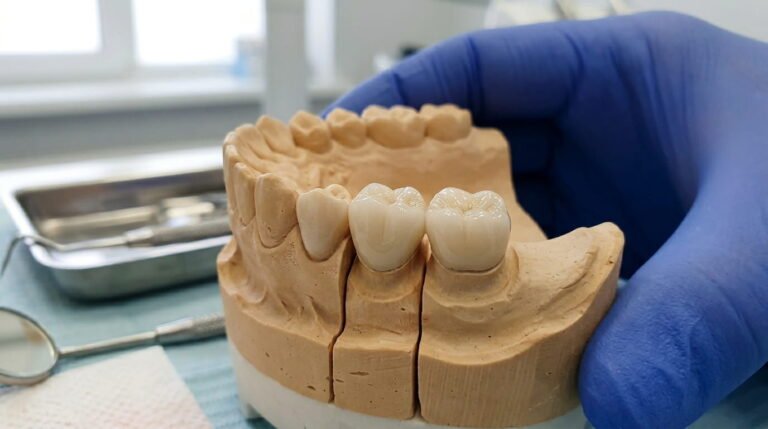
Step 7: Fabrication of the Permanent Crown
The dental laboratory creates the custom crown according to:
- Tooth shape
- Bite alignment
- Color matching
- Functional requirements
Modern CAD/CAM technology improves accuracy and efficiency.
Step 8: Permanent Crown Placement
At the second appointment, the dentist removes the temporary crown.
The permanent crown is then:
- Checked for fit
- Evaluated for comfort
- Examined for bite alignment
- Polished and adjusted
Once everything fits properly, dental cement permanently secures the crown.
Step 9: Final Bite Adjustment
The dentist ensures that the crown aligns correctly with opposing teeth.
Minor adjustments may be made to prevent discomfort or uneven pressure.
Same-Day Dental Crown Procedure
Some dental offices offer same-day crowns using CAD/CAM technology.
The process includes:
- Digital scanning
- Computer-designed crown
- In-office milling
- Immediate placement
Benefits of Same-Day Crowns
- One appointment
- No temporary crown
- Faster treatment
- High precision
However, availability depends on the clinic’s technology.
How Long Does the Dental Crown Procedure Take?
Traditional crowns typically require:
- First visit: 60–90 minutes
- Laboratory fabrication: 1–3 weeks
- Second visit: 30–60 minutes
Same-day crowns may be completed in approximately 2–3 hours.
Is the Dental Crown Procedure Painful?
Most patients experience minimal discomfort.
Dentists use local anesthesia to numb the treatment area.
After the procedure, some temporary symptoms may occur:
- Mild soreness
- Sensitivity to temperature
- Gum tenderness
These symptoms generally resolve within a few days.
Recovery After a Dental Crown Procedure
Recovery is usually quick and uncomplicated.
First 24 Hours
Patients should:
- Avoid extremely hard foods
- Chew carefully
- Follow oral hygiene instructions
During the First Week
Some sensitivity is normal, especially when consuming hot or cold foods.
Most patients return to normal activities immediately.
Dental Crown Aftercare Tips
Proper care helps crowns last many years.
Brush Twice Daily
Use fluoride toothpaste and a soft-bristled toothbrush.
Floss Carefully
Floss around the crown to remove plaque and food particles.
Avoid Hard Objects
Avoid chewing:
- Ice
- Pens
- Hard candy
Wear a Night Guard
If you grind your teeth, a night guard can protect the crown.
Attend Regular Checkups
Routine dental visits help identify problems early.
Benefits of the Dental Crown Procedure
Restores Tooth Strength
Crowns reinforce weakened teeth and prevent fractures.
Improves Appearance
Modern crowns look natural and aesthetically pleasing.
Enhances Function
Patients can chew and speak normally.
Long-Term Protection
Crowns protect teeth from further damage.
High Success Rate
Dental crowns are among the most successful restorative treatments available.
Potential Risks and Complications
Although uncommon, some issues may occur.
Tooth Sensitivity
Temporary sensitivity is common after placement.
Loose Crown
Cement may weaken over time.
Crown Damage
Crowns can occasionally chip or crack.
Gum Irritation
Some patients experience temporary gum discomfort.
Allergic Reactions
Rarely, individuals may react to metal components.
Regular dental checkups help prevent and address these issues.
How Long Do Dental Crowns Last?
The lifespan of a crown depends on:
- Material type
- Oral hygiene
- Diet
- Teeth grinding habits
Average lifespan:
- Porcelain crowns: 10–15 years
- Zirconia crowns: 15–20 years
- Metal crowns: 20+ years
With proper care, many crowns last significantly longer
Dental Crown Procedure Cost
Costs vary depending on several factors:
Factors Affecting Cost
- Crown material
- Geographic location
- Dentist experience
- Additional procedures
- Dental insurance coverage
Average Cost Range
- Metal crowns: $500–$1,500
- Porcelain crowns: $800–$3,000
- Zirconia crowns: $1,000–$3,500
Patients should consult their dentist for an accurate estimate.
Who Is a Good Candidate for a Dental Crown?
You may be a good candidate if you have:
- A cracked tooth
- Severe tooth decay
- A large filling
- A root canal-treated tooth
- Cosmetic concerns
- A dental implant requiring restoration
A dental examination determines eligibility.
Dental Crown vs. Dental Veneer
Many patients confuse crowns and veneers.
Dental Crown
- Covers the entire tooth
- Provides structural support
- Used for damaged teeth
Veneer
- Covers only the front surface
- Primarily cosmetic
- Requires less tooth reduction
Your dentist can recommend the best option based on your needs.
Frequently Asked Questions
Can I Eat Normally with a Dental Crown?
Yes. Once the permanent crown is secured, most patients can eat normally.
Can a Crown Get a Cavity?
The crown itself cannot decay, but the underlying tooth can develop decay near the crown margins.
How Do I Know If My Crown Needs Replacement?
Signs include:
- Pain
- Looseness
- Cracks
- Visible wear
- Gum recession
Are Crowns Permanent?
Crowns are considered a long-term solution but may eventually require replacement.
Conclusion
The dental crown procedure is one of the most effective treatments for restoring damaged, weakened, or aesthetically compromised teeth. By covering and protecting the natural tooth structure, crowns improve strength, appearance, and function while helping preserve long-term oral health.
Whether you need a crown after a root canal, to repair a fractured tooth, or to enhance your smile, understanding the dental crown procedure can help you make informed decisions about your dental care. With modern materials, advanced technology, and proper maintenance, dental crowns can provide beautiful and durable results for many years.